Afternoon Workshop
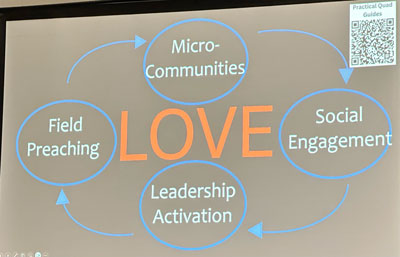
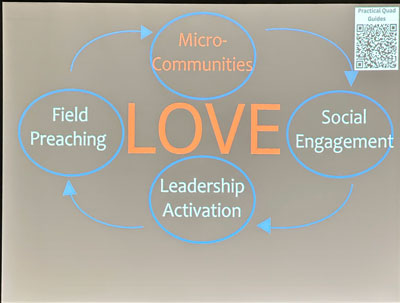
In the afternoon, I attended Dr. Boggan’s workshop on John Wesley PRACTICAL Quadrilateral of living out Methodism in today’s world; true discipleship in today’s context. It is important to remember that the four parts are all essential pieces of ONE package that must be implemented if the method is to work. They are not a menu of options to choose from. Here are pictures of most of the slides from the presentation.
 -
-
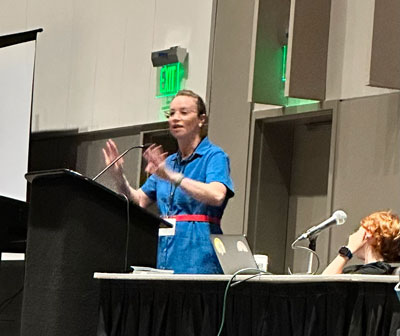
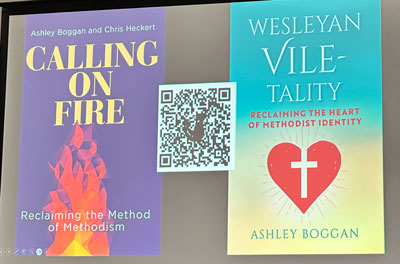
Link to book. Boggan's son ran the slides.
 -
-
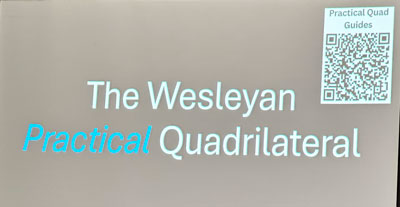
Reminder of previous day's keynote. Link to Practical Quad Guides.
 -
-
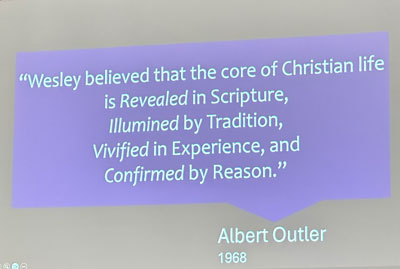
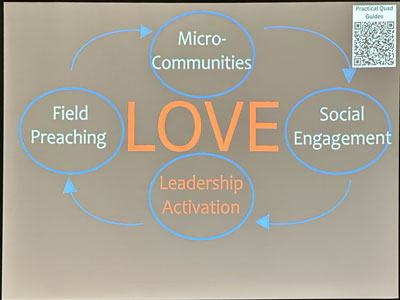
Practical Quadrilateral of Action and Discipleship — Most have heard of Wesley's methodology of theological discernment.
 -
-
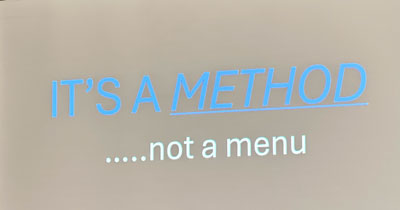
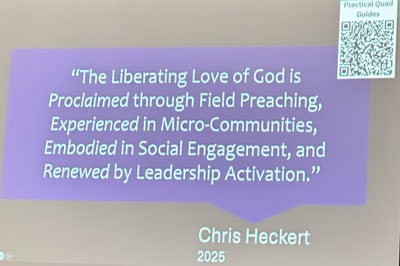
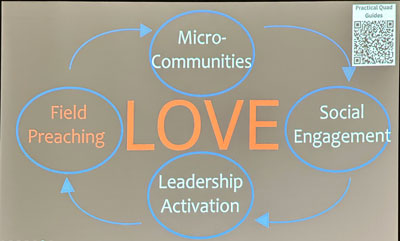
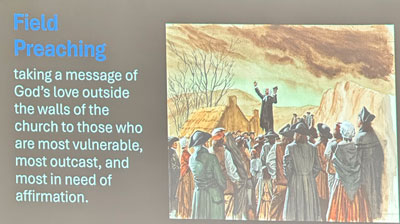
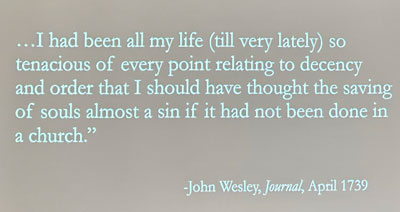
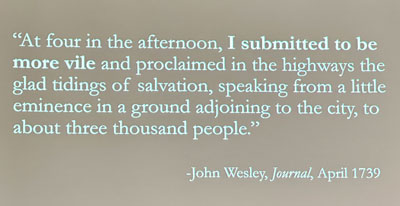
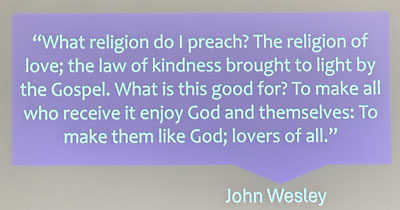
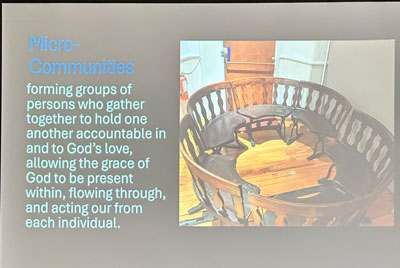
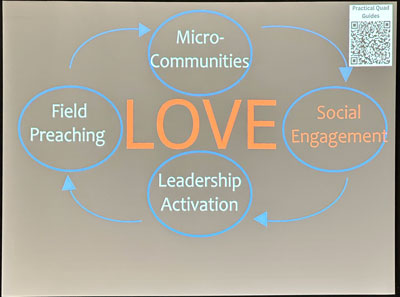
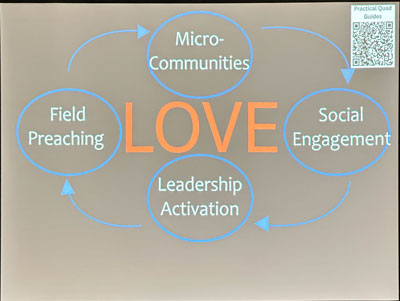
Need all four parts for method to work. Can't pick and choose. Liberating Love of God is proclaimed through Field Preaching, experienced in Micro-Communities, embodied in Social Engagement, and renewed by Leadership Activation.
 -
-
 -
-
 -
-
 -
-
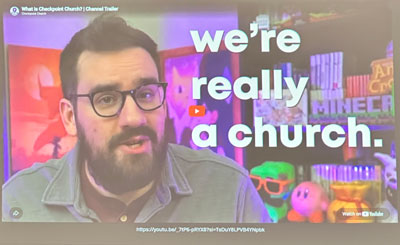
Link to Checkpoint Church YouTube. Church for “nerds, geeks, and gamers in mind.”
 -
-
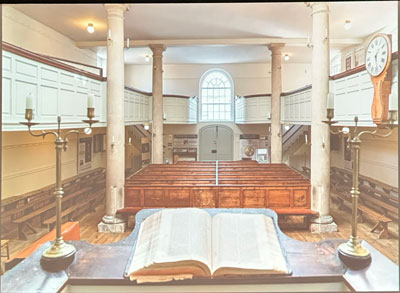
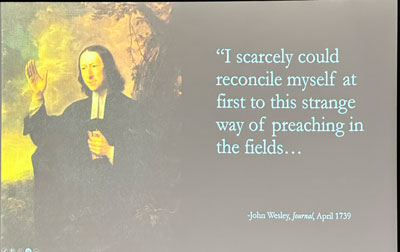
Covenant Disciple groups and Wesley’s New Room in Bristol, England UK (virtual tour). From Methodist Heritage: In 1739 George Whitefield invited John Wesley to preach in the open-air in Bristol. John accepted the invitation and began preaching to miners in Kingswood, 4 miles from the centre of Bristol. Within a few weeks work started on building a meeting place for two religious societies in the city. The building was put up in such haste that 9 years later in 1748 a ‘New Room’ was needed, adding an upper floor in order to accommodate visiting preachers’ bedrooms and a common room around a beautiful octagonal window.
Being well placed in the heart of the city, the New Room became a centre for the Wesleys’ work in Bristol. It was where John’s strong sense of social justice was first expressed. The New Room became a base for running a school for the poor, for providing food and clothes to the needy, for offering free medical care to the sick, and for helping those in the nearby prison. It was also the first place to use John Wesley’s ‘class’ system, where members were divided into sub-groups for mutual support and development.
The New Room was one of John Wesley’s three key centers. Many of the annual conferences were held there, including the one that first created Methodist circuits. Bristol’s trading links encouraged the growth of American Methodism. Thomas Webb, Francis Asbury, and others committed themselves to working there and sailed from nearby Pill. It was in Bristol that Wesley ordained some lay preachers in 1786 to become clergy in America and the New Room was a launching pad for his anti-slavery campaign.
 -
-
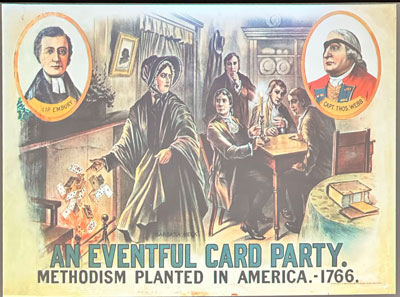
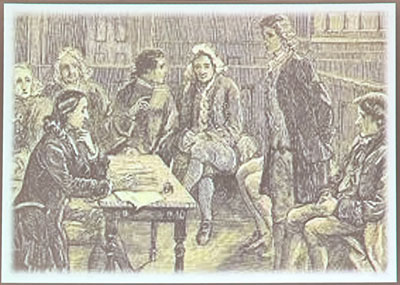
Story of holding each other accountable: Barbara Heck was a cousin of Philip Embury. Embury was a Methodist preacher in Ireland before immigrating to America but lost his zeal and left off preaching. One evening he, Heck’s husband and some friends were playing cards (gambling) at the Heck household. Heck was so indignant at what was happening, she burst into the room where they were playing cards, she seized the pack of cards, and threw them into the fire. She then forcefully scolded Embury for mingling in the frivolities and sinful amusements of life: “You must preach to us, or we shall all go to hell together, and God will require our blood at your hands!” Embury went back to preaching and organized a Methodist class. Barbara Heck converted and organized other women to form the first Methodist congregation in New York City.
 -
-
 -
-
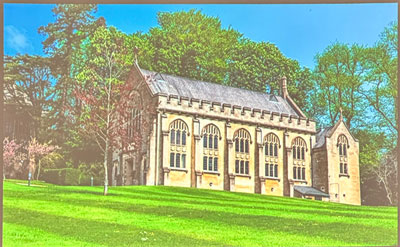
Kingwood School founded by Wesley in 1748 for boys and girls of all social classes.
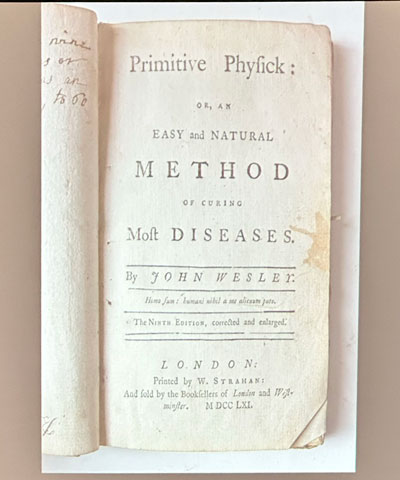 As part of caring for his community in Bristol, Wesley researched medical remedies and published what he found in
the “Primitive Physick”. He updated it every year. Wesley allowed people to address the bodily hurts alongside or
before spiritual hurts. Although, a lot of the remedies are now considered medical quackery, the idea of addressing
the physical needs of people along with the spiritual needs was revolutionary in Wesley's day of asceticism and
physical self-denial. Wesley was trying to provide some relief that was accessible. Willing to admit when he was
wrong, he published many revisions.
As part of caring for his community in Bristol, Wesley researched medical remedies and published what he found in
the “Primitive Physick”. He updated it every year. Wesley allowed people to address the bodily hurts alongside or
before spiritual hurts. Although, a lot of the remedies are now considered medical quackery, the idea of addressing
the physical needs of people along with the spiritual needs was revolutionary in Wesley's day of asceticism and
physical self-denial. Wesley was trying to provide some relief that was accessible. Willing to admit when he was
wrong, he published many revisions.
Get the micro-communities out into the world to address the hurts and needs of their communities.
 -
-
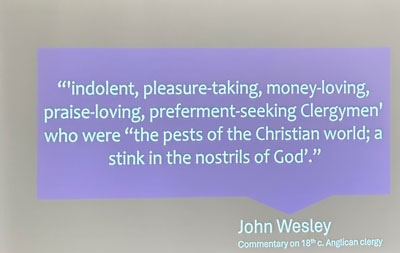
Wesley's commentary on the Anglican clergy of his day—why Wesley used lay ministers.
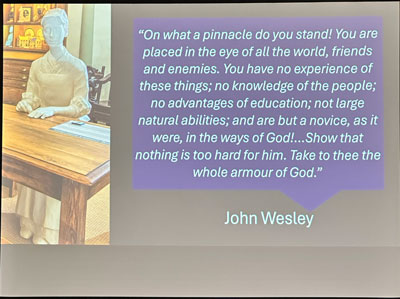 Sarah Ryan (an “untouchable” woman)
disowned by her father at age 12, worked as domestic servant, escapes an abusive husband, is abandoned by
another husband, and third husband is believed to have died at sea. Wesley recognizes that she has a gift from
God. He puts her in charge of running the first Methodist preaching house in England. She is tasked/entrusted
with making sure every word preached is of a Wesleyan Methodist theological understanding. She thrived!
Sarah Ryan (an “untouchable” woman)
disowned by her father at age 12, worked as domestic servant, escapes an abusive husband, is abandoned by
another husband, and third husband is believed to have died at sea. Wesley recognizes that she has a gift from
God. He puts her in charge of running the first Methodist preaching house in England. She is tasked/entrusted
with making sure every word preached is of a Wesleyan Methodist theological understanding. She thrived!
Use new leaders and pay special attention to those who may the “untouchable” of today.
 -
-
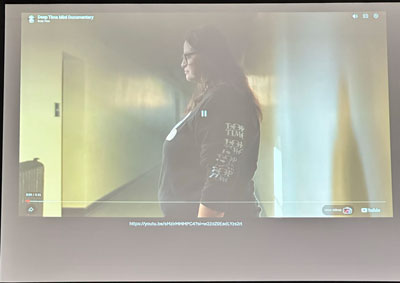
Link to YouTube video about Deep Time leadership activation in North Carolina.
 -
-
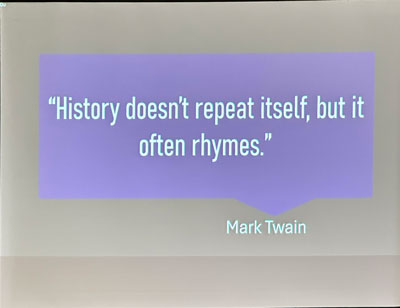
The state of the world today is not that different from John Wesley’s day. The state of the church was distressed. People thought that what was preached from the pulpit had anything to do with what happened outside the church walls. Distrust of institutional religion. Theology of fear. Methodism came in and disrupted all of that. Message of love and joy. Challenge to make Christianity real in the lives of hurting people. Remember our Methodist roots, our DNA!
Afternoon concluded with the Memorial Service: Remembering the Saints — Memorial Booklet link. Evening 7:30 to 9-ish PM was Legislative Sections. Legislation that was approved by 85+% of a legislative section went onto the Consent Calendar. Two or three items were later removed by petition to be brought to the full Plenary session in Day 3 or Day 4.